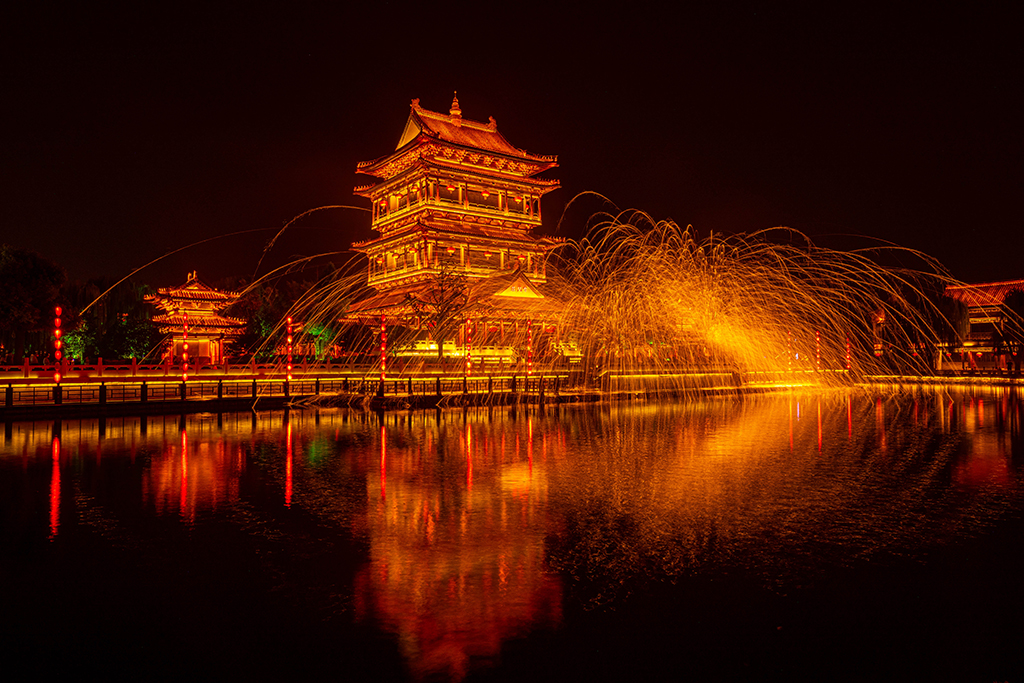
Strike Iron Flower
Introduction
Strike Iron Flower, also known as Dashuhua or Datiehua, is a traditional Chinese art form that has captivated audiences with its unique blend of performance and craftsmanship. Originating from Yuxian county in Zhangjiakou, Hebei province, this art form involves performers throwing molten iron against walls to create spectacular showers of sparks. Resembling a natural fireworks display, Dashuhua has been practiced for over centuries. In 2008, it was included in the second batch of China's national intangible cultural heritage representative list. Its mesmerizing visual appeal and cultural significance have made it a popular attraction at cultural festivals and events across China.
Historical Background
The origins of Dashuhua can be traced back to ancient Chinese traditions, where communities would create their own fireworks displays using available materials. This was a cost-effective alternative to traditional fireworks, which were often an expensive luxury reserved for the wealthy. The practice of throwing molten iron to create sparks is believed to have been developed by blacksmiths, who utilized their skills in metalworking to produce dazzling visual effects that mimicked the grandeur of fireworks. Over time, Dashuhua evolved into a respected form of cultural expression and entertainment, celebrated for its artistry and ingenuity.
Techniques and Performance
Dashuhua performances are a testament to the skill and precision required to safely execute such a visually striking display. The technique involves heating iron to temperatures exceeding 1,600 degrees Celsius before skillfully launching it against a hard surface to create a shower of sparks. This requires not only expertise in handling the molten iron but also a deep understanding of the tools and materials involved.
The primary materials used in Dashuhua are iron and a hard surface against which it can be thrown. The tools employed include specialized scoops made from willow roots, which allow performers to safely handle the molten iron. These tools are essential for controlling the trajectory and spread of the molten iron, ensuring a consistent and safe performance. Performers typically wear protective clothing, such as sheepskin coats and bamboo hats, to guard against burns and injuries during the performance.
With precise timing and movement, they throw the molten iron against the wall, creating a cascade of sparks that light up the night sky. The performers' movements are often synchronized with accompanying music or other cultural performances, such as dragon dances, enhancing the overall spectacle. The combination of skill, timing, and artistry makes each Dashuhua performance a unique and memorable experience.
Variations and Regional Differences
While Dashuhua originated in Hebei province, its practice has spread to various regions across China, each adding its unique flair to the performance. In different areas, the technique may vary slightly, incorporating local traditions and cultural elements. For instance, performances in Tai’erzhuang and Yangzhou have integrated Dashuhua into broader cultural festivals, combining it with other traditional arts like dragon dances and folk music. These regional variations not only enhance the diversity of the art form but also reflect the adaptability and resilience of this ancient tradition.
Modern Influence and Popularity
In recent years, Dashuhua has gained significant attention both nationally and internationally, thanks to its inclusion in cultural festivals, television dramas, and international exhibitions. Modern technology and media have played a crucial role in amplifying its reach, introducing Dashuhua to new audiences worldwide. The art form has appeared in popular Chinese dramas such as Story of Yanxi Palace, where it was showcased as part of a cultural narrative, further boosting its recognition and appreciation among younger generations.
Efforts for Preservation and Promotion
Preserving Dashuhua as a cultural heritage item involves concerted efforts from cultural organizations, government bodies, and local communities. Initiatives have been launched to document and teach the techniques to new generations, ensuring the continuity of this traditional art form.
Dashuhua's status as an intangible cultural heritage has led to increased efforts to preserve and promote it. Cultural organizations in China have recognized its historical and artistic value, leading to its inclusion in cultural heritage lists and providing it with official protection and support. This recognition has helped secure funding and resources for training programs and performances.








